
Cognac vs Whisky in Malaysia: Key Differences and Which to Buy

One question. Two great spirits. Here is exactly how to choose.
Cognac is a French grape spirit. Whisky is a grain spirit. That is the core difference in one sentence, and everything else flows from that single fact about how each one is made. The flavour, the price tier, what to drink it with, which one to gift, all of it traces back to grapes versus grain.
We get this question a lot at Mr. Chow. Customers browsing our French grape spirits and full whisky range often pause and ask: which is actually better? The honest answer is that they are doing very different things, for very different occasions. This guide on cognac vs whisky breaks it down so you can make the right call for yourself.
Key Takeaways
- Cognac is a grape-based spirit from the Cognac region of France, regulated by strict BNIC rules. Whisky is a grain-based spirit distilled in countries like Scotland, Ireland, the USA, and Japan.
- The two spirits taste completely different. Cognac tends toward dried fruit, floral notes, and silky richness. Whisky ranges from light and honeyed to heavily peated and smoky, depending on origin and style.
- For gifting in Malaysia, both carry strong prestige. Hennessy and Martell are the go-to cognac names. Johnnie Walker and Glenfiddich are reliable whisky picks at any price point.
- If you are new to spirits, Hennessy VSOP or Jameson are both approachable starting points. Neither will overwhelm a first-time palate.
- At Mr. Chow, we stock 100% genuine cognac and whisky sourced from authorised distributors. Chow Fast delivers across Peninsular Malaysia, same-day in the Klang Valley for orders before 2PM.
Grapes vs Grain: What Actually Sets Them Apart
Grapes versus grain. That is the whole story in three words. Cognac is made from grapes. Whisky is made from grain, typically malted barley, corn, rye, or wheat depending on where it comes from and what style is being made.
That grape-versus-grain divide shapes everything: the fermentation, the distillation method, the character of the new spirit, and what it becomes after years in oak. Cognac belongs to the brandy family, which means it starts as wine. Whisky starts as something closer to beer, a fermented grain wash. Both then go through distillation and oak ageing, but the starting point sends them in completely different directions.
Geography is the other big split. Cognac is a protected designation of origin. To carry the name, the spirit must be produced in the Cognac region of south-west France, under rules set by the BNIC (Bureau National Interprofessionnel du Cognac). Whisky has no single home. Scotland, Ireland, the USA, Japan, Taiwan, and India all produce whisky under their own distinct regulations and traditions.
So when you are asking “cognac vs whisky” or “whisky or cognac”, you are really asking: do I want a vinous, French-regulated spirit with centuries of terroir behind it, or do I want a grain spirit with a whole world of styles to explore? Both are excellent answers. Let’s get into how each is made.
Production Explained: From Grape or Grain to Glass
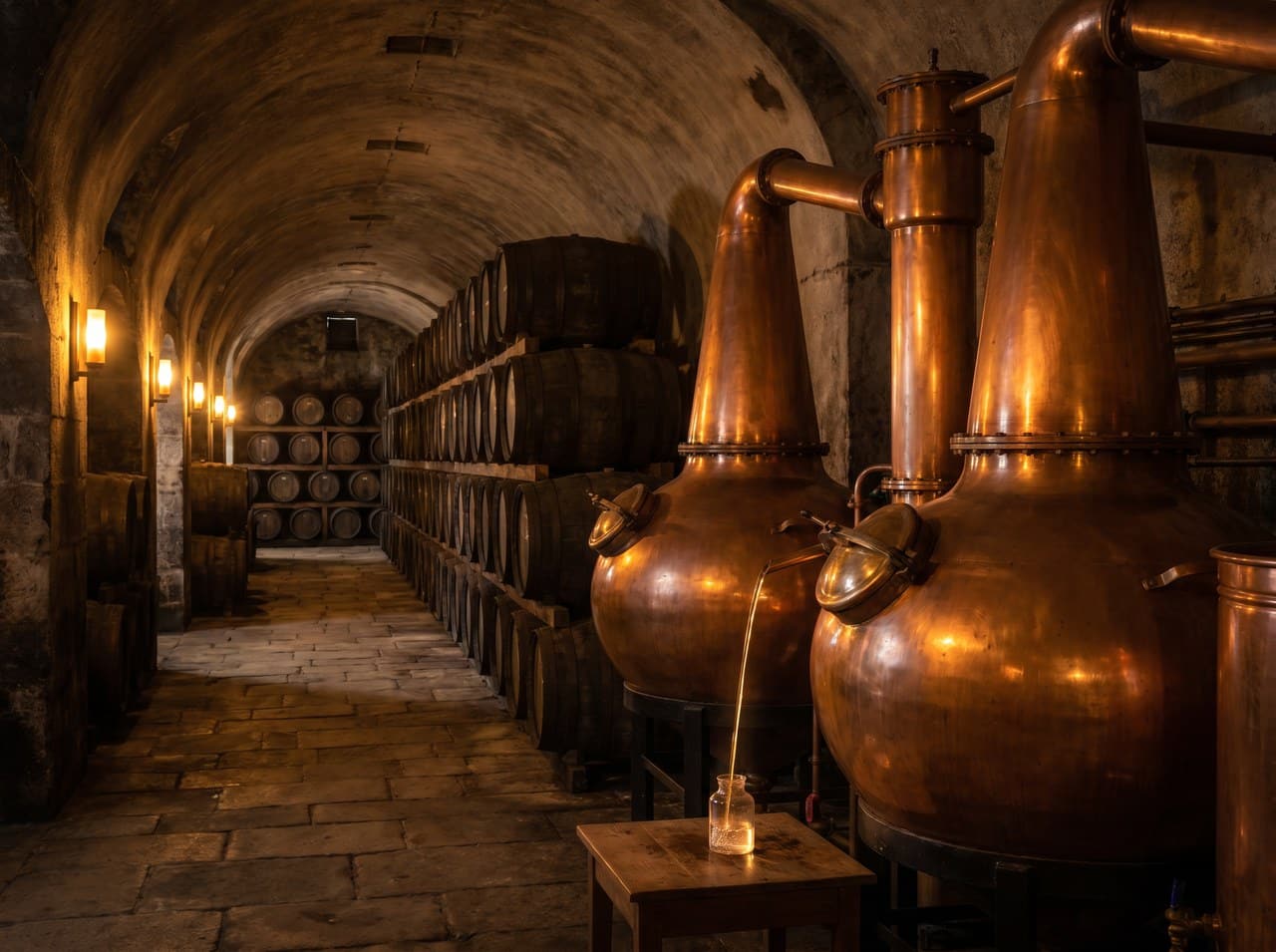
The production process explains the flavour. Understanding how each is made makes the difference obvious, and makes you a more confident buyer.
Cognac: Grapes, Double Distillation, French Oak
Cognac starts with white wine grapes, primarily Ugni Blanc, grown in the Cognac appellation in France. The harvested grapes are fermented into a sharp, low-alcohol wine, then double-distilled in traditional copper pot stills called alembic charentais. The resulting clear spirit is then aged for a minimum of two years in French Limousin or Tronçais oak barrels. It is during this ageing period that cognac picks up its characteristic colour, structure, and those deep dried-fruit and vanilla notes that make it recognisable.
The age statements matter. VS (Very Special) means a minimum of two years in oak. VSOP (Very Superior Old Pale) means at least four years. XO (Extra Old) means a minimum of ten years under current BNIC rules. A bottle like the Hennessy XO expression contains eaux-de-vie aged well beyond that floor, blended for depth and consistency across every release.
Whisky: Grain, Distillation Style, and a Wide World of Casks
Whisky production starts with grain. For Scotch single malt, that means malted barley, mashed, fermented with yeast, then distilled (usually twice) in copper pot stills. American bourbon uses a grain mash that must be at least 51% corn, distilled in column stills and aged in new charred American oak barrels. Irish whiskey is often triple-distilled for a lighter, smoother character, using a mix of pot and column distillation.
Cask policy is where whisky gets particularly interesting. Scotch distilleries use a wide range of ex-bourbon barrels, sherry casks, port pipes, and wine casks to finish their spirit. Each maturation path pulls out different flavour compounds from the wood. This is why two single malts from the same region can taste nothing alike. The wood does the heavy lifting.
Here’s the thing: knowing how each is made tells you exactly what to expect in your glass. Now let’s talk flavour.
What Will You Actually Taste in Your Glass?
Side by side, these are two very different drinking experiences. Neither is objectively better. They occupy different flavour territory entirely.
Cognac sits in a specific lane: rich, round, and vinous. The grape origin gives it a natural sweetness that grain spirits simply do not have. Expect dried apricot, raisin, orange blossom, vanilla, and toasted oak. The Martell house style is a steady example: elegant, slightly lighter than Hennessy, with stone fruit and floral notes on the nose. Martell Cordon Bleu pushes deeper into baked spice and cocoa territory. It is the kind of pour you sit with, not rush. Shiok if you enjoy something contemplative.
Whisky is far less predictable. A Glenfiddich 12 Year old gives you fresh pear, light floral notes, and subtle vanilla from its bourbon-cask maturation. Singleton of Glendullan reads honey and dried fruit with a gentle nuttiness. Johnnie Walker Black Label blends 12-year-old Scotch whiskies for a smoky, full-bodied character with dried fruit and a hint of peat smoke on the finish. Move toward the Islay style and the peat becomes the whole conversation: medicinal, seaweed, campfire. Totally different planet from cognac.
The short version: if you want something fruity, smooth, and vinous, cognac wins. If you want range, character, and the ability to explore across years, whisky gives you a lifetime of options.
So what does that mean for a first-time buyer in Malaysia? Let’s answer that directly.
Where Should a First-Time Buyer in Malaysia Start?
Both are approachable, but they ask for different things from a first-time drinker. The right entry point depends on what you are comfortable with.
Cognac is forgiving. The natural grape sweetness and the rounded texture from long oak maturation make even a VSOP like Hennessy VSOP Privilege 700ml at RM255 easy to sip without much prior experience. There are no sharp edges. The fruit-forward profile is familiar enough that most palates find it immediately pleasant. Serve it neat or with a few cubes of ice and it holds up well either way. If you are searching for the best cognac Malaysia has to offer at an accessible price, this is the bottle most people start with.
For whisky, the entry point matters a lot. Jameson Irish Whiskey is one of the best starting points on the market: triple-distilled, light, and slightly sweet with no abrasive notes. Glenfiddich 12 is similarly friendly, fresh, and accessible. Boleh tahan, as we say. Either of those will ease someone into the whisky world without putting them off. Save the heavily peated Islay malts for later, once the palate has developed some vocabulary.
Our honest recommendation for a first-time buyer: start with whichever style matches the occasion. Cognac for something slightly more formal, whisky for something more social and exploratory. You cannot go wrong with either if you pick the right entry-level bottle.
But there’s a catch: what you buy for yourself and what you buy as a gift are two different decisions. Here is how to get the gifting call right.
Cognac or Whisky: Which Makes a Better Gift in Malaysia?
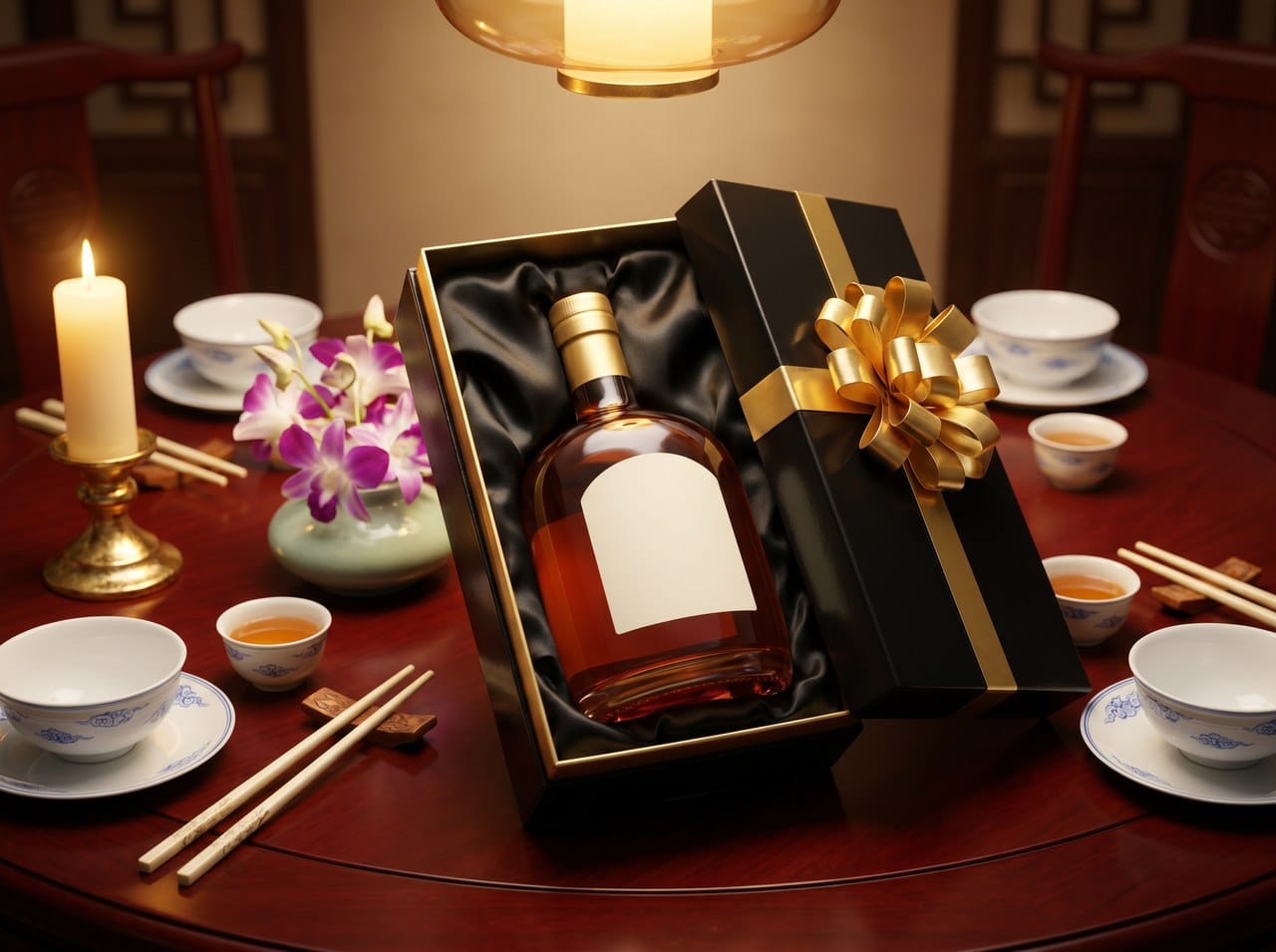
In Malaysian gift culture, both carry serious prestige. The right choice depends on the recipient and the occasion.
Cognac has a strong association with celebration and status, particularly in Chinese Malaysian culture where brands like Hennessy and Martell carry generational brand equity. The Hennessy VSOP price of RM255 for a 700ml puts it squarely in the “generous but not reckless” gifting sweet spot. A well-chosen VSOP for a dinner or celebration is always well-received. You do not need to explain it. The recipient already knows what it is. If the occasion calls for something more elevated, Hennessy XO or Martell Cordon Bleu reads as a genuinely considered gift rather than a default pick.
Whisky gifting works best when you have some sense of the recipient’s preferences. A blended Scotch from a respected house is safe and universally appreciated. A single malt like Glenfiddich 12 is a power move if the recipient is a Scotch drinker. It signals that you paid attention to what they actually enjoy, not just grabbed the most recognisable label.
For corporate gifting without a lot of context on the recipient, cognac is the steadier bet. The name recognition is broader and the luxury positioning is clearer to most Malaysian audiences. Whisky is the stronger choice when you know the person drinks it.
Ready to Choose? Here Is the Final Call.
Pick cognac if you want something rich, fruity, and occasion-ready. Pick whisky if you want range, depth, and a spirit you can explore across many different styles and price points.
More practically: both belong in a well-stocked home bar. They serve different moods and different moments. A VSOP cognac for when guests come over and you want something immediately impressive. A good blended Scotch or a friendly Irish whiskey for a weekday pour or a more casual session.
At Mr. Chow, we carry both categories with 100% genuine stock sourced from authorised distributors. If you are not sure what to start with, our team is a WhatsApp message away. Speak to Joyce at +60 16-9562 840, Monday to Saturday, 9AM to 5PM, and she will point you in the right direction.
Ready to browse? Explore our full spirits selection and filter by category, brand, or price tier to find what suits you. New to Mr. Chow? Your first order qualifies for 4% off, subject to a minimum spend of RM500 with a maximum discount of RM200.
For a deeper look at specific cognac picks at different price points, our guide to the best cognac in Malaysia by budget breaks it down clearly. If you want to understand how cognac sits within the broader brandy family, our cognac and brandy comparison guide covers the distinctions in full. And if Scotch whisky is pulling your attention, our recommended Scotch brands for Malaysian buyers piece is worth a read before you commit to a bottle.
✓
100% Authentic
Sourced from authorised distributors
✓
Same-Day KL Delivery
Order before 2PM on working days
✓
Secure Checkout
Safe payment, every order
Sources
- Scotch Whisky Association: Scotch whisky production regulations and category definitions
- Bureau National Interprofessionnel du Cognac (BNIC): Cognac appellation rules, age statement requirements, and regional designations
Frequently Asked Questions
What is the main difference between cognac and whisky?
Cognac is made from grapes and produced exclusively in the Cognac region of France. Whisky is made from grain (barley, corn, rye, or wheat) and produced in countries including Scotland, Ireland, the USA, and Japan. Both are distilled and aged in oak, but the raw ingredient gives them fundamentally different flavour profiles. Cognac tends toward fruit and floral richness; whisky ranges from light and honeyed to smoky and peated depending on style and origin.
Is cognac stronger than whisky?
Not necessarily. Both cognac and whisky are typically bottled between 40% ABV and 46% ABV for standard expressions, so they sit at a similar strength. Some cask-strength or high-proof whisky expressions go considerably higher, sometimes above 55% ABV, but that is not the norm for entry and mid-range bottles. Strength alone is not the right way to compare them: the flavour character and texture differ far more than the alcohol level.
Which is better for mixing in cocktails, cognac or whisky?
Both work well in cocktails, but for different drinks. Whisky is the backbone of classics like the Old Fashioned, Whisky Sour, and Highball. Cognac shines in the Sidecar, Brandy Alexander, and the classic Champagne Cocktail. For a casual mixer at home, Irish whiskey or a blended Scotch like Johnnie Walker Black Label are very flexible. For something more refined and fruit-forward in a cocktail, a VS or VSOP cognac is the better choice.
Does Mr. Chow carry both cognac and whisky?
Yes. We stock a full range of both. Our cognac selection includes Hennessy VSOP, Hennessy XO, Martell VSOP, and Martell Cordon Bleu, all sourced from authorised distributors. For whisky, we carry Johnnie Walker Black Label, Singleton, Glenfiddich 12, Jameson, and many more. Every bottle is 100% genuine. Browse the full range in our online shop.
Can you deliver cognac or whisky to me in Malaysia?
Yes. We deliver across Peninsular Malaysia via our Chow Fast service. Within the Klang Valley, delivery is RM25 flat and same-day on orders placed and paid before 2PM on working days (excluding Sundays and public holidays). Beyond the Klang Valley, delivery is RM30 and takes 2 to 5 working days. Free delivery applies on orders above RM1,250 anywhere within Peninsular Malaysia. Delivery is available to non-Muslim adults aged 21 and above only.
How do I know the cognac or whisky I buy from Mr. Chow is genuine?
Every bottle we sell is sourced from authorised distributors. If you have a question about the provenance of a specific bottle before you order, our team is happy to confirm it via WhatsApp. Reach Joyce at +60 16-9562 840, Monday to Saturday, 9AM to 5PM.
Is cognac the same as brandy?
Cognac is a type of brandy, but not all brandy is cognac. Brandy is the broad category for any spirit distilled from fermented fruit juice, most commonly grapes. Cognac is a specific, tightly regulated brandy produced only in the Cognac appellation of France under BNIC rules. Think of it this way: cognac is to brandy what Champagne is to sparkling wine. The name is protected. Our cognac range versus brandy guide covers this in more detail if you want the full picture.
Disclaimer: The content of this article is provided for general informational purposes only and does not constitute legal, health, or professional advice. Alcohol is sold strictly to non-Muslim customers aged 21 and above, for delivery within West Malaysia (Peninsular Malaysia) only. Prices, availability, and delivery conditions are subject to change without notice. Nothing in this article should be read as a health or medical claim about any product. Please drink responsibly.



![Flash Sale - Beefeater London Dry Gin [1000ML] x 2](https://shopwithmrchow.com/wp-content/uploads/2026/01/Flash-Sale-Beefeater-London-1.jpg)

![Tanqueray No.Ten Small Batch Gin [1000ML]](https://shopwithmrchow.com/wp-content/uploads/2026/07/Tanqueray-No.Ten-Small-Batch.jpg)
![Wild Turkey 101 Proof Bourbon [1000ML]](https://shopwithmrchow.com/wp-content/uploads/2025/07/wp-image-mrchowliquorstore-2308.jpg)